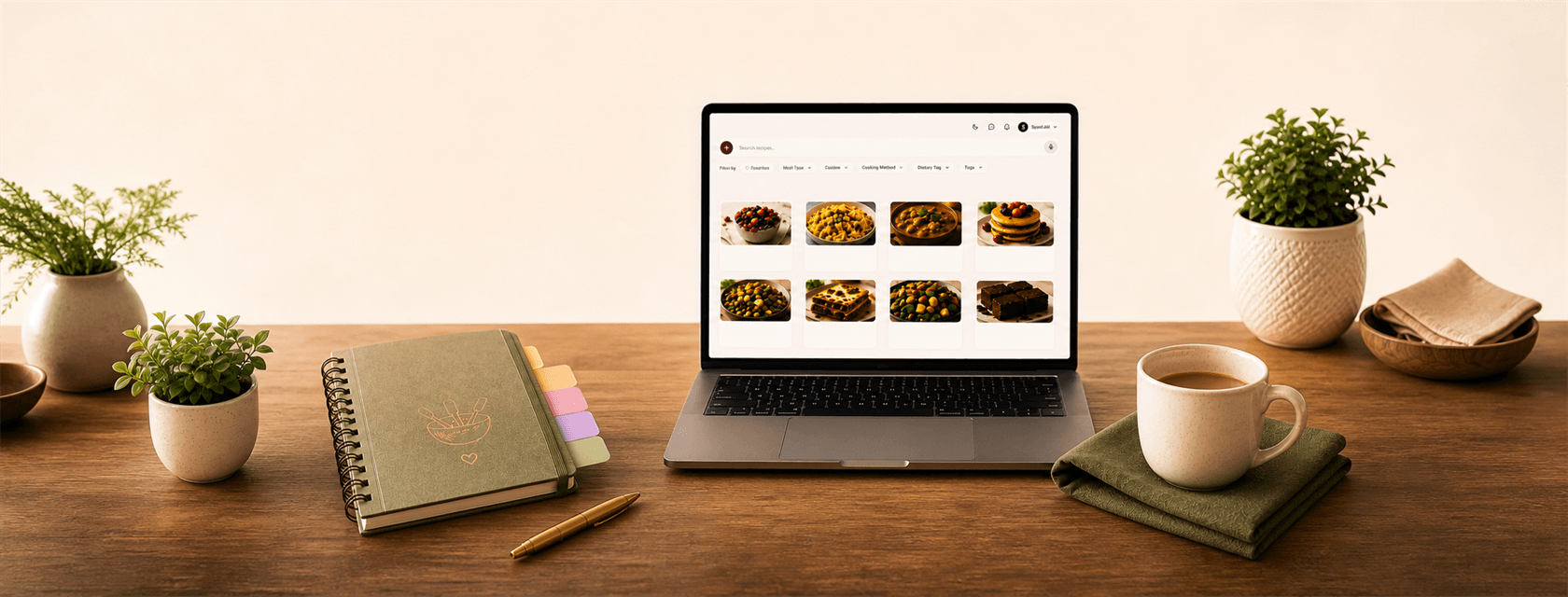
You save a pasta recipe from a website, screenshot a breakfast idea, bookmark a cooking video, and keep an old handwritten recipe from someone in the family.
Over time, those recipes begin to form a personal collection—but they are still scattered across different places.
A digital cookbook brings them together in a way that is searchable, flexible, and easier to use when it is time to cook.
A personal cookbook can grow with you
A traditional cookbook is usually finished before you buy it. Your personal cookbook is different.
It can include:
- Family recipes
- Meals you cook regularly
- Recipes saved from websites
- Ideas discovered in videos
- Photos of handwritten cards
- Recipes you want to try later
- Notes and adjustments that make a recipe work better for you
Instead of being limited to one cuisine or author, it reflects how you and your household actually cook.
Start with the recipes that matter most
You do not need to organize everything at once.
Begin with recipes that fall into one of these groups:
- Meals you already cook often
- Recipes your household enjoys
- Recipes you plan to try soon
- Recipes connected to family traditions
- Reliable meals for busy days
Starting with a smaller group makes the process feel manageable.
Organize recipes around real-life needs
People do not always choose meals by cuisine or course. Often, they choose based on time, mood, schedule, or dietary preference.
Useful collections might include:
- Weeknight dinners
- Quick breakfasts
- Family favorites
- High-protein meals
- Vegetarian recipes
- Meals to try
- Holiday recipes
- Desserts
Choose collection names that match the questions you ask when deciding what to cook.
For example, 30-Minute Meals may be more useful than a broad collection called Main Dishes.
Use filters to find recipes faster
Collections provide broad organization, while filters help narrow the results.
You may want to filter by:
- Cuisine
- Meal type
- Cooking method
- Dietary preference
- Favorites
- Personal tags
This makes it easier to move from “I need dinner” to a smaller set of recipes that fit the moment.
Add notes that make recipes personal
A personal digital cookbook becomes more useful when it records what you learned.
After cooking a recipe, you might note:
- Use less salt next time
- Double the sauce
- The family preferred a different vegetable
- Bake for five minutes longer
- Good option for guests
- Works well for lunch the next day
Those details turn a saved recipe into something that reflects your own experience.
Review your cookbook occasionally
Your preferences and routines change.
Every few months:
- Remove recipes you no longer want
- Mark dependable meals as favorites
- Update notes after cooking
- Add useful new recipes
- Move recipes into better collections
A smaller, well-maintained cookbook is often more useful than a large collection you never review.
From scattered recipes to something personal
A digital cookbook is more than a place to store recipes.
It becomes a record of what you enjoy cooking, what works for your household, and what you want to make next.
KichMate helps bring recipes from links, photos, videos, handwritten cards, and manual entries into one searchable collection. From there, you can organize them, add them to a meal plan, prepare a grocery list, and use them when it is time to cook.
Ready to build your personal digital cookbook?
Bring together the recipes you already love and start creating a cookbook that grows with you.
Start organizing with KichMate.